
Red Ginger Extract Nanoemulsion Potently Inhibits MCF-7 Breast Cancer Cells and Decreases Inflammation
Abstract
Breast cancer (BC) known as prevalent cancer, and compounds in red ginger (Zingiber officinale var. rubrum) (RG) have potential as anticancer agents. In developing the potential of RG, developing RG nanoparticles (RGN) increases effectiveness and reduces side effects. A study aimed to determine the effectiveness of RGN on MCF-7 cell lines for inhibiting BC and reducing inflammation. RGN was prepared using RG extract, chitosan, Na-TPP, and solvents. RGN was characterized using PSA, TEM, and ZPA. Cytotoxicity of RGN against the MCF-7 cell line was determined using WST-8. ROS levels were measured with flow cytometry. The NF-κB gene expression was analyzed using RT-qPCR. The findings show that the RGN has a diameter of about 773 nm (PSA), 25.1 mV and 0.000194 cm2/Vs Electrophoretic Mobility (ZPA). The TEM results show the shape of RGN in the small ball form of a particle size approximately 79 nm. Among the tested samples for cytotoxicity, 400 μg/mL RGN produced the lowest viability along with the highest inhibition against MCF-7 cells, with 583.40 μg/mL of IC50. The 800 µg/mL RGN concentration can reduce the level of ROS and 200 µg/mL RGN concentration can reduce NF-κB gene expression. RGN was successfully characterized as a nanoemulsion and showed cytotoxic potential, breast cancer growth inhibition, and inflammation in MCF-7 cells. This implies that RGN may be an alternative to cancer anti-breast agents based on in vitro studies.
Keywords:
Anticancer, Breast cancer, MCF-7, NF-κB, Red ginger nanoemulsionIntroduction
Breast cancer became the majority of cases diagnosed worldwide outpacing lung and prostate cancer cases in 2020.1 Breast cancer caused 685,000 deaths in 2020 worldwide, and is the most prevalent cancer found in women, with a total of 2.26 million cases.2 In 2020, Asia’s age-standardized breast cancer incidence rate (ASIR) was 36.8 per 100,000 women, which is lower than the incidence rates in Africa (40.7) and Caribbean & Latin America (51.9).3 However, the increase in cancer cases in Asia continues to rise, with an annual percentage change in incidence ranging from 0.46% to 2.56%.4 In Indonesia, BC is among the most frequent cancers found in women, accounting for 30.8% of all cases in 2020, which caused 20.4% of deaths due to cancer in the same year.5 This disease is a very significant enemy of society in this country, there is no effective treatment without causing side effects to overcome the increasing cases of BC in the world, especially in Indonesia.
Breast cancer occurs due to defects of tumor suppressor genes and oncogenes modulated by nuclear factor kappa B (NF-κB) transcription factors (TF).6 NF-κB is a proinflammatory transcription factor normally induced in breast cancer.7 NF-κB has an important part in the formation of normal mammary glands mediated by the NF-κB ligand-receptor activator (RANKL), and its RANKL receptor, using receptor osteoprotegerin (OPG) feed. RANKL stimulates NF-κB, promoting tumorigenesis, cell cycle regulation, and apoptosis in breast cancer.8 On the other hand, exposure to estrogen rays too often can increase the risk of BC through the generation of ROS in large quantities, which will facilitate continued NFκB activity, usually through IκB kinase 1 (IKK1).9 NF-κB can be activated by ROS by various mechanis ms can also be regulated by NF-κB.10 Previous studies have shown that NF-κB overexpression expresses malignant tumor biology in BC and can predict the presence of tumors that may have a poor prognosis.7 Therefore, effective treatments that suppress NF-κB gene expression and do not cause side effects are needed.
Plants hold great potential as alternative anti-cancer agents due to their efficiency and reduced side effects compared to conventional drugs.11 One promising example is red ginger (Zingiber officinale var rubrum), plant that differs significantly from white ginger in its origin, appearance, and traditional uses. The rhizome of red ginger has a distinctive reddish hue, contrasting with the pale yellow or cream color of white ginger. In Indonesia and Southeast Asia, red ginger has a long history as a medicinal ingredient, commonly used for pain relief, inflammation reduction, and immune enhancement. Compared to white ginger, red ginger contains higher levels of active compounds, including 10-gingerol, 8-gingerol, 6-gingerol, and 6-shogaol, which contribute to its potent anti-inflammatory and anticancer effects.12 Notably, 10-gingerol is known for its strong anti-inflammatory and antioxidant properties, while 6-gingerol exhibits anticancer activity, inducing cell cycle apoptosis and arrest in cancer cells like MCF-7 breast cancer cells. Additionally, red ginger rhizomes are rich in starch (52.9%), essential oils (3.9%), and alcohol-soluble extracts (9.93%), further enhancing their therapeutic potential.
Nanotechnology research has grown to address the major challenges of conventional cancer therapy, such as drugs that are difficult to dissolve, drugs that have limited stability, systemic toxicity, and tumor targeting that are not yet efficient.13 Nanoparticles have several advantages, such as being biocompatible, non-immunogenic, non-toxic, and biodegradable, so it only minimizes the risk of function loss or unexpected side effects found in conventional therapy.14 In addition, nanoparticles have the possibility for timely delivery of chemotherapy to tumor cells, achieve optimal efficacy, and reduce cytotoxicity in healthy peripheral tissues.15 Red ginger extract formulated in the form of nanoparticles has its advantages, that research on nanoparticles is still little done, especially against cancer cells.
In this study, red ginger nanoparticles (RGN) which have the potential as an anticancer were conducted on MCF-7 BC cell model through in vitro experiments. (MCF-7) cells is a suitable cell line for research on breast cancer in the world and also research on anticancer drugs.16 MCF-7 cells are responsive to estrogen9 and function as an artificial breast cancer.17 The research was carried out to evaluate the nanoemulsion red ginger extract (RGN) on the MCF-7 cell line to see its potential in inhibiting breast cancer and reducing its inflammation.
Experimental
Extraction of red ginger – Red Ginger (Zingiber officinale var. rubrum) extract was processed at PT FAST, Depok, Indonesia, according to Good Manufacture Procedure (GMP). The extraction method used is maceration with 70% ethanol and lactose as an excipient.
Preparation of nanoparticles of red ginger extract – 15 mL of red ginger ethanol extract added to distilled water 100 mL and 60 mL of combined solvent between propylene glycol, 70% ethanol, and 10% DMSO. 40 mL of 1% chitosan is added to the extract solution and mixed with magnetic stirrer at 1500 rpm. 0.4% Na-TPP was added with ratio 1 drop per 3 seconds as much as 20 mL and stirred with magnetic stirrer at 300 rpm. 18 Nanoparticles were confirmed successfully after the formation of turbidity and sediment. The pellet from the process is red ginger extract, while the supernatant is RGN.
RGN characterization by Particle Size Analyzer (PSA), Zeta Potential Analyzer (ZPA), and Transmission Electron Microscopy (TEM) – RGN particle shape determined using a Beckman Coulter LS 13 320.19 The charge on the particle surface was characterized with HORIBA Scientific SZ-100 by quantifying zeta potential and electrophoretic mobility values.20 The morphology of RGN was observed using TEM Hitachi HT7700. 19
Cell culture of MCF-7 cell line – The BC MCF-7 cell line (ATCC, HTB-22) was gained from Biomolecular and Biomedical Research Center, PT Aretha Medika Utama, Indonesia. MCF-7 cells were cultivated in MCF-7 cell culture medium basal DMEM High (Biowest, L0103-500) of this corresponds to.21
Cytotoxic potential of RGN by Water-Soluble Tetrazolium 8 (WST-8) – Cytotoxicity on MCF-7 cells was tested using the Enhanced Cell Counting Kit 8 (WST-8/CCK8) (Elabscience, E-CK-A362) following the guidelines from manufacturer. MCF-7 cells were grown at 1 × 10⁴ cells/well cell density in a 96-well plate, then incubated at 37°C for 24 h with 5% CO2. Absorbance was determined by spectrophotometry (Multiskan GO Thermo Scientific, 51119300) at 450 nm.22 Median Inhibitory Concentration 50 (IC50) was discovered using probit analysis according to.23
ROS assay – The ROS levels was counted using the Reactive Oxygen Species (ROS) Fluorometric Assay Kit (Elabscience, E-BC-K138-F) in accordance with the guidelines, with subtle modification by flow cytometry (MACSQuant Analyzer 10, Miltenyi, Germany). MCF-7 cells were treated overnight with RGN at 800, 400, and 200 μg/mL concentrations. After that, the medium was discarded and 1 mL of DCFH-DA 10 uM reagent was added to the cell and incubated for 60 min at 37°C. Then, cells were harvested and washed with serum-free medium twice. The results of the research were analyzed using the MACSQuant Analyzer 10 Flow Cytometer.24–26
Quantification of NF-κBgene expression by RT-qPCR – RNA isolation was conducted using TRI Reagent (Zymo Research, R2050-1-200) and Direct-zol™ RNA Miniprep Plus (Zymo Research, R2073) following the guidelines from manufacturer. The RNA was applied for cDNA synthesis by SensiFAST cDNA Synthesis Kit (Meridian Bioscience, BIO-65054) with a three-stage protocol, namely priming (at 25°C for 5 min), reverse transcription (at 46°C for 20 min), and inactivation of RT (at 95°C for 1 min) based on.4

RNA purity of MCF-7 cells treated with RGN
The NF-κB gene expression and the constituently demonstrated β-Actin genes were analyzed using real-time qPCR (Table 2). β-Actin as a housekeeping regulatory gene was used as an internal control.26 AriaMx Real-time PCR System used for PCR Amplification (Agilent, G8830A) with the temperature, time, and QRT-PCR cycle settings in Table 3.
Primer sequences operated in qRT-PCR
Temperature, time, and Cycle RT-qPCR
Statistical analysis – Statistical analysis was performed through SPSS software (version 20.0; SPSS Inc; USA). Data analysis was carried through one-way analysis of variance (ANOVA), followed by Tukey HSD post-hoc test for normally distributed and homogeneous data, while Dunnett’s T3 post-hoc test was performed for normally distributed, but not homogeneous data. Kruskal Wallis statistical analysis with Mann Whitney U test was used if there was data that is distributed non-normally and non-homogeneous. The p value that was specified as the significance value of the data is ≤ 0.05. Data was then visualized as mean ± standard deviation (SD) in histograms created in the GraphPad Prism (version 8.0.244).
Results and Discussion
Chitosan is used to summarize RGN because it is biodegradable, biocompatible, and potentially useful as a dissolving agent, drug stabilizing agent, and controlled-release drug control.10 Encapsulation of red ginger extract in chitosan was also administered with Na-TPP cross-linking agent. The interaction that occurs between chitosan and Na-TPP will automatically cause the distance between the chitosan chains to stretch so that a protonated amine group -NH3 is formed that will interact with red ginger extract.5 As a carrier of red ginger extract, a mixture of chitosan and sodium tripolyphosphate (Na-TPP) may protect, stabilize, or limit core release.27
Morphology and particle size distribution are the most important parameters for characterizing ice nanoparticles.27 To observe the size and morphology of RGNs, they were analyzed using PSA, ZPA, and TEM. The size of the RGN is determined by the particle size results using a size analyzer. The results obtained show that RGNs are characterized as nanoparticles because they have a less than 1000 nm diameter, which is 773 nm. The characterization results obtained by us show that the RGN that has been made in size corresponds to the nanoparticle criteria, as the nanoparticles size varies in the range of 10 to 1000 nm, with at least one dimension below 100 nm.28 Particle size, one of the most fundamental characteristics of nanoparticles, is important for nanoparticle transport.29 The characterization output shows that the size of the RGN varies based on the method used. PSA identified the largest size to be about 773 nm, while TEM identified the smallest size to be about 79 nm. Nanoparticle samples from red ginger extract were analyzed using TEM to analyze the nanoparticles shape and size. The RGN visualization is shown in Fig. 1. The TEM results showed small spherical nanoparticles with an average particle size of about 79 nm, smaller than the PSA test results. This can increase the absorption of the active ingredients from the extract into the cells being tested.
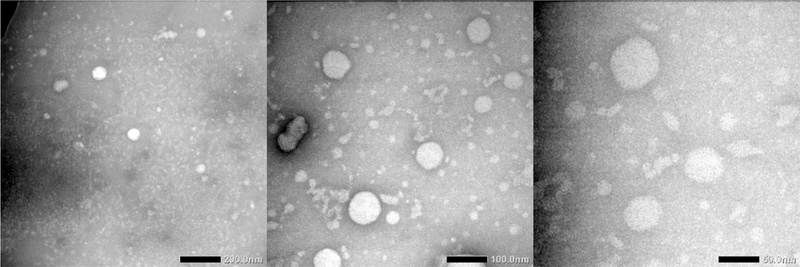
The Morphology of RGN Using TEMAnalysis.
The anticancer effectiveness of nanoparticles depends on their size; Generally, the smaller the size of the nanoparticles, the more effective they are at suppressing the growth of cancer cells.30 Large nanoparticles can exert targeting abilities in passive blood through the effects of increased permeability and retention (EPR) and willingness to accumulate near tumor blood vessels.29 In addition, TEM also highlighted that RGN has a round shape (Fig. 1). The transport and diffusion of nanoparticles will be significantly affected by the shape of the particles. It has been shown that due to its intrinsic symmetry, spherical particles move easily but non-spherical ones fall with the flow.31
Zeta potential (ZP) is one of the important properties that can significantly affect the efficacy of nanomedicine32 because the short-term and long-term stability of nanoparticles can only be predicted based on their values.33 The stability and surface charge of colloidal nanoparticles were analyzed by zeta potential analysis (ZP).34 The ZP RGN value was obtained as 25.1 mV. This shows that the RGN evaluated is quite stable. In addition, the value of RGN electrophoresis mobility was also obtained, which was 0.000194 cm2/Vs. Zeta potential analysis is operated to identify the stability and surface charge of colloidal nanoparticles.35 However, other variables, such as particle size, dispersion, and shape, can also impact the stability of nanoparticles in addition to zeta potential.44,36 The ZP RGN value was obtained as 25.1 mV. However, according to37, the stability level of ZP nanoparticles with values of >+25 mV or <−25 mV is often very high. ZP values range from 20 to 40 mV, improving system stability and reducing the likelihood of aggregate formation or increased particle size.46 This suggests that the RGN evaluated is likely to be very stable. The electrophoresis mobility value of RGN was also obtained, which was 0.000194 cm2/Vs. Electrophoresis mobility controls how fast particles move when subjected to an electric field.39 Very small values indicate that RGNs move very slowly in response to electric fields.
This study investigated the potential cytotoxicity of RGN in MCF-7 cancer cell lines using various concentrations (Fig. 2). Research conducted by40 regarding the potential anticancer activity of a combination of ginger oleoresin, curcumin, and solid lipid nanoparticles, the cytotoxicity of the combination against several types of cancer cells has been routinely confirmed, including MCF-7 cells. This study successfully showed that RGN has cytotoxic potential against MCF-7 cells. The addition of cytotoxicity as the concentration of RGN increases shows that dose is the main determining factor in influencing cytotoxicity. The cytotoxic effect of RGN on the MCF-7 cell line was observed after 24 h. Fig. 2 shows the results of the RGN evaluation on the viability and inhibition of MCF-7 cell lines. The output showed that all RGN concentrations were detected to promote significant inhibition of MCF-7 compared to negative controls. The concentration of RGN that causes the lowest viability and the highest inhibition in MCF-7 cells is 400 μg/mL (group III). The higher the RGN applied, the fewer MCF-7 cells survive and the more MCF-7 cells die. The IC50 RGN obtained in this WST-8 test is 583.40 μg/mL. These data show that at this concentration, RGN reduces the viability of MCF-7 cells by 50%. Previous studies have shown cytotoxic effects of ginger-derived compounds on BC cells.41–42 Previous research mentions the effect of 6-gingerol on breast cancer cell lines MDA-MB-231 and MCF-7 found concentration dependent cell proliferation inhibition by 6-gingerol, making it potentially useful as an antitumor agent.42
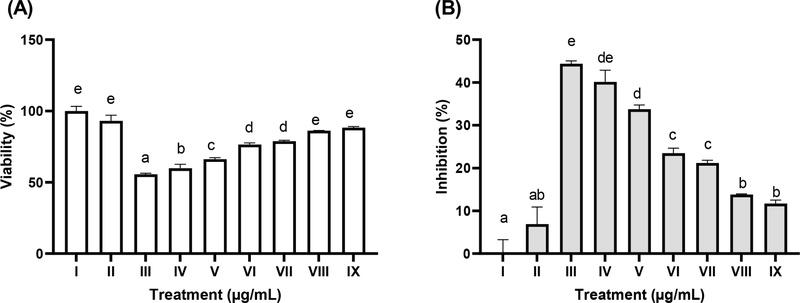
Effect of RGN on viability (A) and inhibition (B) of MCF-7 cells.*Data were obtained from three repetitions. Signs (a, b, c, d, e) (a, ab, c, d, de, e) indicates significant differences based on Tukey's HSD test. I: negative control; II: DMSO control; III: 400 µg/mL; IV: 200 µg/mL; V: 100 µg/mL; VI: 50 µg/mL; VII: 25 µg/mL; VIII: 12.50 µg/mL: IX: 6.25 µg/mL.
High ROS levels, as highlighted in this study, indicate their important role in triggering the cancer process. ROS is known as an agent that can cause DNA damage and is a mutagenic initiator that can trigger tumor formation.43,7 The ROS level of MCF-7 cells was determined by flow cytometry. The spots showed the population of cells being analyzed, and the crest showed ROS-positive cells. Positive control, negative control, DMSO control, and treatment with 200, 400, and 800 μg/mL RGN showed positive ROS levels of 90.50%, 81.42%, 78.04%, 39.55%, 37.86%, and 26.58%, respectively (Fig. 3). MCF-7 cells treated with 800 μg/mL RGN showed a significant decrease compared to negative controls (Fig. 4). Research by44 showed that chronic oxidative stress was shown to increase the proliferation and potential of MCF-7 breast cancer cell tumor formation. In addition, there are many chemotherapy drugs identified to promote cytotoxicity by increasing ROS levels. This study showed that treatment with RGN at certain concentrations had a significant impact on the ROS levels of MCF-7 cells (Fig. 4). ROS levels can be accurately measured using flow cytometry techniques, and the results illustrate the proportion of ROS-positive cells (Fig. 3). This suggests that treatment with RGN leads to a decrease in ROS levels in MCF-7 cells and is in line with research45 which states that more of the antioxidant phytochemicals present can induce the protective effects of red ginger. Because elevated levels of intracellular ROS have been associated with early events involved in cancer initiation and progression, these findings suggest that RGN may have potential healing benefits in breast cancer cells by initiating oxidative stress.
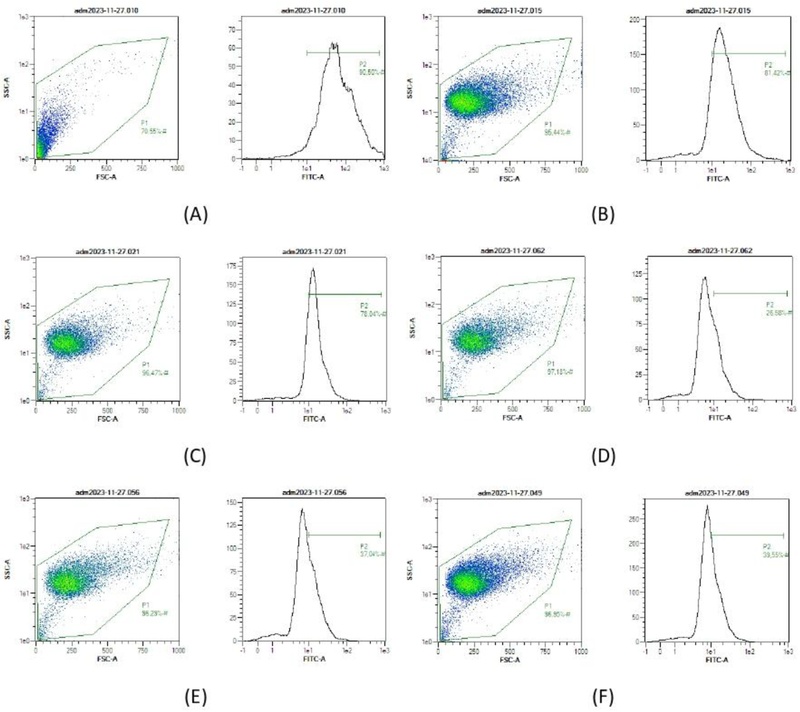
Representation of dot blots on different concentrations of RGN on MCF-7 cells against ROS level by flow cytometry. A: TBHP cells (positive control) 90.50%, B: negative control 81.42%, DMSO control: 78.04%, D: 200 µg/mL RGN: 39,55%, E: 400 µg/mL RGN: 37.86%, F: 800 µg/mL RGN: 26.58%.
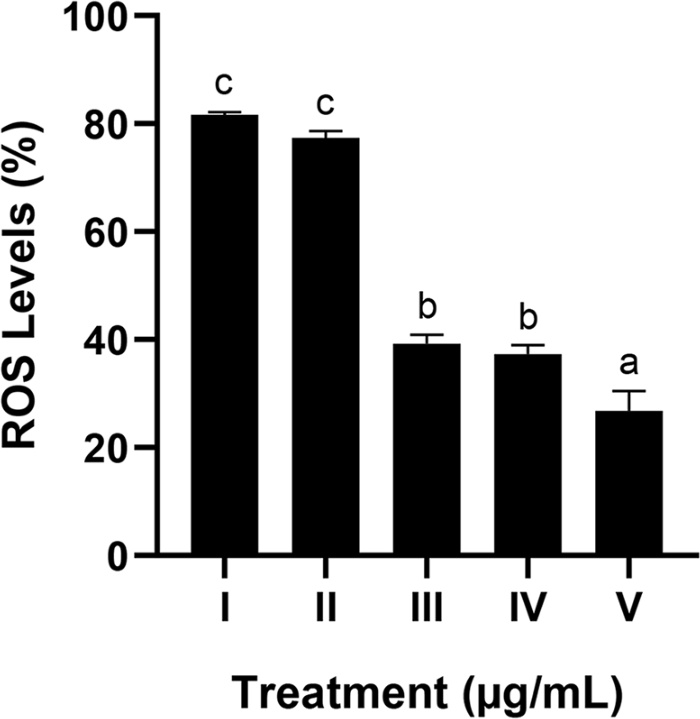
Effect of RGN treatment on ROS levels in MCF-7 breast cancer cells.*Data obtained from three repetitions. Signs (a, b, c) shows significant differences based on Tukey’s HSD test I: negative control; II: DMSO control; III: 200 µg/mL RGN; IV: 400 µg/mL RGN; V: 800 µg/mL RGN.
ROS can trigger inflammation through several mechanisms, which consist of the activation of the NF-κB signaling pathway. NF-κB regulates the expression of genes that play a role in the inflammatory response and cancer development.7,34 The qRT-PCR results showed that RGN could reduce the expression of the NF-κB gene. 200 and 400 μg/mL RGN showed that the NF-κB gene expression decreased significantly, compared to the negative control. Fig. 3 shows the RGN treatment effect on the NF-κB gene expression. The findings of this study suggest that RGN can reduce the NF-κB gene expression in MCF-7 cells (Fig. 5). This is in line with previous research on red ginger and its anti-cancer properties. Red ginger or certain components in red ginger have properties that can affect the proliferation and development of cancer cells. Research by6 stated that red ginger extract showed anticancer activity by inhibiting NF-κB activation. According to,46 6-shogaol, which is also contained in red ginger, may reduce NF-κB transcriptional activity which can inhibit the breast cancer cells invasion.
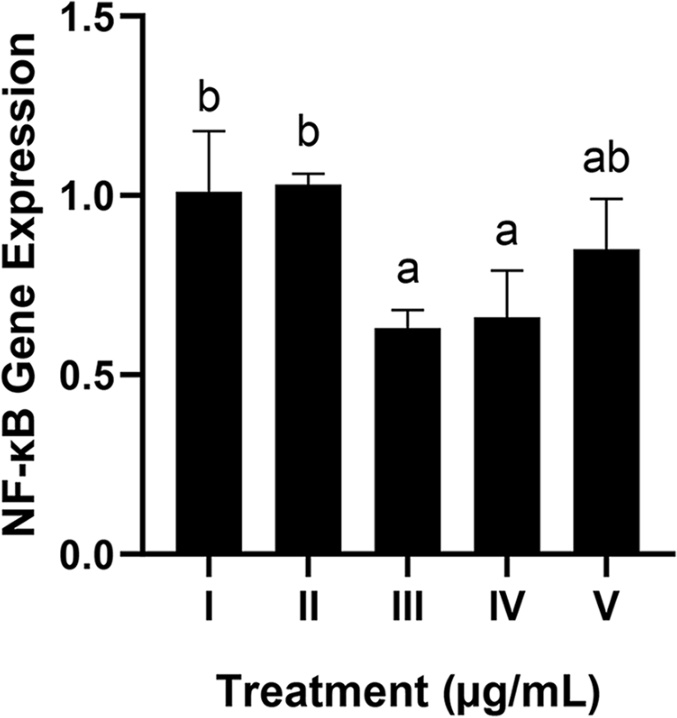
Effect of RGN treatment on NF-κB gene expression in MCF-7 breast cancer cells.*Data were obtained from three repetitions. Signs (a, ab, b) represents significant differences based on Tukey’s HSD test I: negative control; II: DMSO control; III: 200 µg/mL RGN; IV: 400 µg/mL RGN; V: 800 µg/mL RGN.
In conclusion, RGN was successfully characterized through PSA, ZPA, and TEM. RGN can inhibit and reduce the inflammation of breast cancer cells by enhancing the cytotoxic effect and decreasing the level of ROS and NF-κB-mediated inflammation. The results obtained from this study have potential implications for the development of breast cancer therapeutic agents. Future studies should be testing RGN on other cancer cell lines and conducting in vivo studies will help confirm its therapeutic potential and safety profile, bringing it closer to clinical application for breast cancer treatment.
Acknowledgments
We would like to express our gratitude to the Minister of Education, Culture, Research, and Technology of the Republic of Indonesia (Competitive National Research-Fundamental Research 2023) with grant number 051/PG/PG.02.00.PL/2023 for research funding. We are thankful to Adilah Hafizha Nur Sabrina, Annisa Firdaus Sutendi, Faradhina Salfa Nindya, Vini Ayuni, Nindia Salsabila Mia Dewi from the Biomolecular and Biomedical Research Center, Aretha Medika Utama, Jawa Barat, Indonesia, for their valuable support and assistance in facilitating this research and also for PT Fathonah Amanah Shidiq Tabligh (FAST) in Indonesia, for their contribution in preparing the red ginger (Zingiber officinale var. rubrum) extract.
Conflicts of Interest
The authors have no conflicts of interest.
References
-
Arzanova, E.; Mayrovitz, H. N. Exon Public. 2022, 6, 1–9.
[https://doi.org/10.36255/exon-publications-breast-cancer-epidemiology]

-
Łukasiewicz, S; Czeczelewski, M.; Forma, A.; Baj, J.; Sitarz, R.; Stanisławek, A. Cancers 2021, 13, 4287.
[https://doi.org/10.3390/cancers13174287]
-
Lim, Y. X.; Lim, Z. L.; Ho, P. J.; Li, J. Cancers 2022, 14, 4218.
[https://doi.org/10.3390/cancers14174218]
- Widowati, W.; Murti, H.; Widyastuti, H.; Laksmitawati, D. R.; Rizal, R.; Kusuma, H. S.; Sumitro, S. B.; Widodo, M. A.; Bachtiar, I. Int. J. Hematol. Oncol. Stem Cell Res. 2021, 15, 77–89.
-
Ng, B.; Puspitaningtyas, H.; Wiranata, J. A.; Hutajulu S. H.; Widodo, I.; Anggorowati, N.; Sanjaya, G. Y.; Lazuardi, L.; Sripan, P. PloS One 2023, 18, e0288073.
[https://doi.org/10.1371/journal.pone.0288073]
-
Pavitra, E.; Kancharla, J.; Gupta, V. K.; Prasad, K.; Sung, J. Y.; Kim, J.; Tej, M. B.; Choi, R.; Lee, J.-H.; Han, Y.-K.; Raju, G. S. R.; Huh, Y. S. Biomed. Pharmacother. 2023, 163, 114822.
[https://doi.org/10.1016/j.biopha.2023.114822]
-
Wang, W.; Nag, S. A.; Zhang, R. Curr. Med. Chem. 2015, 22, 264–289.
[https://doi.org/10.2174/0929867321666141106124315]
-
Devanaboyina, M.; Kaur, J.; Whiteley, E.; Lin, L.; Einloth, K.; Morand, S.; Stanbery, L.; Hamouda, D.; Nemunaitis, J. Oncol. Rev. 2022, 16, 10568.
[https://doi.org/10.3389/or.2022.10568]
-
Vieira, I. R. S.; Tessaro, L.; Lima, A. K. O.; Velloso, I. P. S.; Conte- Junior, C. A. Nutrients 2023, 15, 3136.
[https://doi.org/10.3390/nu15143136]
-
Herdiana, Y.; Wathon,i N.; Gozali, D.; Shamsuddin, S.; Muchtaridi, M. Pharmaceutics 2023, 15, 879.
[https://doi.org/10.3390/pharmaceutics15030879]
-
Fridlender, M.; Kapulnik, Y.; Koltai, H. Front. Plant Sci. 2015, 6, 799.
[https://doi.org/10.3389/fpls.2015.00799]
-
Sandrasari, D. A.; Andarwulan, N; Faridah, D. N.; Dewi, F. N. A. ALCHEMY J. Penelit. Kimia 2023, 19, 32–43.
[https://doi.org/10.20961/alchemy.19.1.64737.32-43]
-
Vantangoli, M. M.; Madnick, S. J.; Huse, S. M.; Weston, P.; Boekelheide, K. PloS One 2015, 10, e0135426.
[https://doi.org/10.1371/journal.pone.0135426]
-
Mundekkad, D.; Cho, W. C. Int. J. Mol. Sci. 2022, 23, 1685.
[https://doi.org/10.3390/ijms23031685]
-
Raheem, M. A.; Rahim, M. A.; Gul, I.; Zhong, X.; Xiao, C.; Zhang, H.; Wei, J.; He, Q.; Hassan, M.; Zhang, C. Y.; Yu, D.; Pandey, V.; Du, K.; Wang, R.; Han, Y.; Qin, P. OpenNano 2023, 12, 100152.
[https://doi.org/10.1016/j.onano.2023.100152]
- Comşa, Ş.; Cimpean, A. M.; Raica, M. Anticancer Res. 2015, 35, 3147–3154.
-
Lee, A. V.; Oesterreich, S.; Davidson, N. E. J. Natl. Cancer Inst. 2015, 107, djv073.
[https://doi.org/10.1093/jnci/djv073]
-
Rahmat, D.; Farida, Y.; Brylianto, A. T.; Sumarny, R.; Kumala, S. Int. J. App. Pharm. 2020, 12, 90–93.
[https://doi.org/10.22159/jap.2020v12i4.36249]
-
Wungu, K.; Dewi, T.; Adhika, D. R.; Yusfi, M.; Anindya, A. L.; Aksono, E. B.; Sarassina, R. R. F.; Wijaya, C. H.; Suprijadi. Pertanika J. Sci. Technol. 2021, 29, 2645–2657.
[https://doi.org/10.47836/pjst.29.4.22]
- Pallavi, S, B.; Vijaya, B.; Amit, K.; Rajratna, G.; Pratiksha, A.; Kamlesh, D. Eur Chem Bull, 2023, 12(Special Issue 8), 2947–2959.
-
Widowati, W; Darsono, L; Suherman, J; Afifah, E; Rizal, R; Arinta, Y; Mozef, T; Suciati, T. BIOTROPIA-The Southeast Asian J of Tropic Bio, 2020, 27, 14–21.
[https://doi.org/10.11598/btb.2020.27.1.932]
- Hao, S.; Cho, B. O.; Wang, F.; Shin, J. Y.; Shin, D. J.; Jang, S. I. Food Sci. Technol. 2022, 7, e104221.
-
Sutjiatmo, A. B.; Widowati, W.; Sumiati, I.; Priestu, T.; Arumwardana, S.; Kusuma, H. S.W.; Azizah A. M. Majalah Obat Tradisional 2021, 26, 49–58.
[https://doi.org/10.22146/mot.55333]
- Priyandoko, D; Widowati, W; Gunawan, K. Y. Proceeding of Int Conference on Sci, Health and Techno, 2019, pp 156–159.
-
Girsang, E.; Ginting, C. N.; Lister, I. N.; Gunawan, K. Y.; Widowati, W. PeerJ 2021, 7, e11419.
[https://doi.org/10.7717/peerj.11419]
- Widowati, W.; Widyanto, R. M.; Husin, W.; Ratnawati, H.; Laksmitawati, D. R.; Setiawan, B.; Nugrahenny, D.; Bachtiar, I. Iran J. Basic Med. Sci. 2014, 17, 702–709.
- Chandirika, J. U.; Sindhu, R.; Selvakumar, S.; Annadurai, G. INDO American J. of Pharm. Sci. 2018, 5, 1955–1961.
-
Yusuf, A.; Almotairy, A. R.; Henidi, H.; Alshehri, O. Y.; Aldughaim, M. S. Polymers 2023, 15, 1596.
[https://doi.org/10.3390/polym15071596]
-
Xu, J.; Song, M.; Fang, Z.; Zheng, L.; Huang, X.; Liu, K. J. Control. Release. 2023, 353, 699–712.
[https://doi.org/10.1016/j.jconrel.2022.12.028]
-
Rao, P. V.; Nallappan, D.; Madhavi, K.; Rahman, S.; Wei, L. J.; Gan, S. H. Oxid. Med. Cell. Longev. 2016, 2016, 3685671.
[https://doi.org/10.1155/2016/3685671]
-
Chenthamara, D.; Subramaniam, S.; Ramakrishnan, S. G.; Krishnaswamy, S.; Essa, M. M.; Lin, F.-H.; Qoronfleh, M. W. Biomater. Res. 2019, 23, 20.
[https://doi.org/10.1186/s40824-019-0166-x]
-
Honary, S.; Zahir, F. Trop. J. Pharm. Res. 2013, 12, 255–264.
[https://doi.org/10.4314/tjpr.v12i4.2]
-
Lu, G. W; Gao, P. Emulsions and microemulsions for topical and transdermal drug delivery; In Handbook of non-invasive drug delivery systems; William Andrew Publishing; United State, 2010, pp 59–94.
[https://doi.org/10.1016/B978-0-8155-2025-2.10003-4]
-
Park, M. H.; Hong, J. T. Cells 2016, 5, 15.
[https://doi.org/10.3390/cells5020015]
-
Patra, J. K.; Baek, K.-H. J. Nanomater. 2014, 417305.
[https://doi.org/10.1155/2014/417305]
- Agustini R; Amyliana NA; Herdiyastuti N; Sanjaya IG. IJCSE, 2021; pp 375-381.
-
Shnoudeh, A. J.; Hamad, I.; Abdo, R. W.; Qadumii, L.; Jaber, A. Y.; Surchi, H. S.; Alkelany, S. Z. InBiomat and Bionanotechno, 2019, 527–612.
[https://doi.org/10.1016/B978-0-12-814427-5.00015-9]
-
Samimi, S.; Maghsoudnia, N.; Eftekhari, R. B.; Dorkoosh, F. Charact and Bio of Nanomaterials for Drug Delivery, Springer; Switzerland, 2019, pp 47–76.
[https://doi.org/10.1016/B978-0-12-814031-4.00003-9]
-
Tiwari, P.; Ferson, N. D.; Andrew, J. S. J. Colloid Interface Sci. 2020, 15, 109–115.
[https://doi.org/10.1016/j.jcis.2020.02.103]
-
Thao, D. T.; Nga, N. T.; Van, N. A.; Hung, K. D. Nat. Prod. Commun. 2019, 14, 1–7.
[https://doi.org/10.1177/1934578X19858461]
-
Chen, C.-Y.; Chen, Y. N.; Shiau, J. P.; Tang, J.-Y.; Hou, M.-F.; Chang, H.-W. Int. J. Mol. Sci. 2023, 24, 5741.
[https://doi.org/10.3390/ijms24065741]
-
Sp, N.; Kang, D.-Y.; Lee, J.-M.; Bae, S. W; Jang, K.-J. Int. J. Mol. Sci. 2021, 22, 4660.
[https://doi.org/10.3390/ijms22094660]
-
Bekhet, O. H.; Eid, M. E. Transl. Cancer Res. 2021, 10, 4196.
[https://doi.org/10.21037/tcr-21-629]
-
Mahalingaiah, P. K. S.; Singh, K. P. PloS One 2014, 9, e87371.
[https://doi.org/10.1371/journal.pone.0087371]
-
Oboh, G.; Akinyemi, A. J; Ademiluyi, A. O. Exp. Toxiciol. Pathol. 2012, 64, 31–36.
[https://doi.org/10.1016/j.etp.2010.06.002]
-
Ling, H.; Yang, H.; Tan. S.-H.; Chui, W.-K.; Chew EH. Br. J. Pharmacol. 2010, 161, 1763–1777.
[https://doi.org/10.1111/j.1476-5381.2010.00991.x]